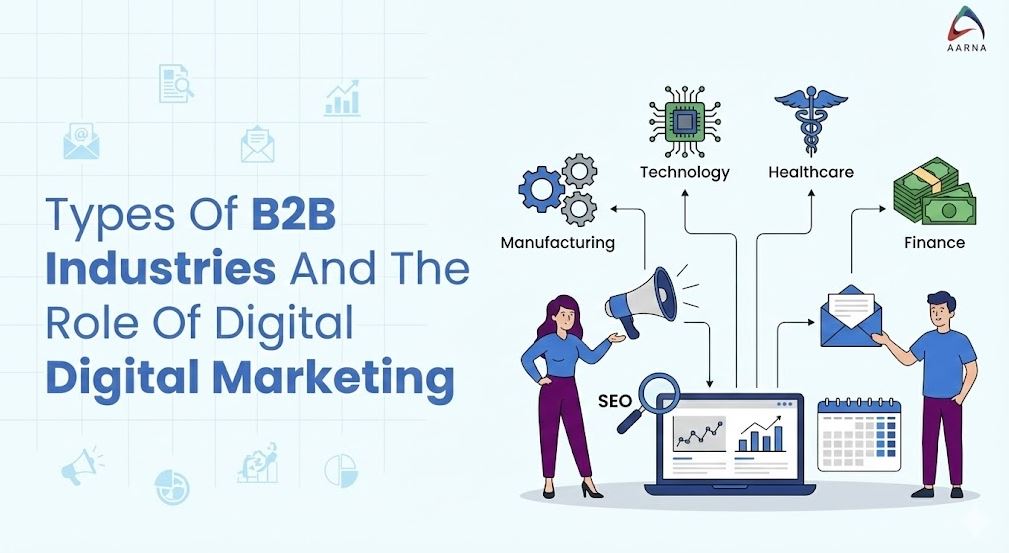
Types of B2B Industries and How Digital Marketing Drives Growth
In today’s competitive business landscape, business-to-business (B2B) companies must rely on more than traditional sales methods to grow. Digital marketing has become a powerful tool for B2B brands to reach decision-makers, build trust, and generate qualified leads. Understanding the different types of B2B industries and how digital marketing supports each one can help businesses create more effective growth strategies.
What Are B2B Industries?
B2B industries include companies that sell products or services directly to other businesses rather than to individual consumers. These industries often involve longer sales cycles, multiple decision-makers, and a strong focus on relationship building. Digital marketing helps simplify this process by improving visibility, educating buyers, and nurturing leads over time.
1. Technology and Software Industry
The technology and software sector is one of the most digitally driven B2B industries. Companies offering SaaS products, cloud services, cybersecurity solutions, and enterprise software depend heavily on SEO, content marketing, and email campaigns.
Digital marketing strategies such as blogs, case studies, webinars, and product demos help software companies educate buyers and demonstrate value. Search engine optimization ensures that potential customers find solutions when researching online.
2. Professional Services Industry
Professional service providers such as consultants, marketing agencies, accounting firms, and legal services rely on digital marketing to establish credibility. Content marketing, personal branding, and LinkedIn outreach are especially effective in this space.
By sharing insights, case studies, and expert opinions, professional service firms position themselves as trusted advisors and attract high-quality leads.
3. Manufacturing and Industrial Industry
Manufacturing and industrial businesses use digital marketing to modernize their traditionally offline and relationship-driven sales models. As more buyers research suppliers online, SEO plays a critical role in helping manufacturers appear in search results when businesses look for machinery, equipment, components, or industrial solutions.
This applies across a wide range of manufacturing industries, including automotive manufacturing, industrial electronics manufacturing & semiconductor production, heavy machinery and equipment manufacturing, chemical and pharmaceutical manufacturing, metal fabrication, and packaging industries.
Well-optimized websites, detailed product pages, and technical blogs help answer buyer questions early in the decision-making process. LinkedIn marketing and targeted campaigns allow manufacturers to reach procurement managers, engineers, and operations leaders. Digital marketing also strengthens distributor relationships by providing easy access to product information, specifications, and technical documentation, making the buying journey more efficient and transparent.
4. Wholesale and Distribution Industry
Wholesale and distribution companies use digital marketing to improve reach and simplify the buying process. SEO, paid search, and email marketing help connect with retailers and business buyers searching for bulk products.
Online catalogs, optimized product listings, and customer portals enhance user experience and increase conversions.
5. Logistics and Transportation Industry
Logistics and transportation companies use digital marketing to highlight reliability, speed, and efficiency. Website optimization, local SEO, and LinkedIn advertising help reach supply chain managers and operations teams.
Content focused on shipping solutions, warehousing, and supply chain trends helps build trust and authority in a competitive market.
6. Financial Services Industry
B2B financial services such as banking, fintech, insurance, and payment solutions use digital marketing to explain complex offerings. Content marketing, email nurturing, and webinars help educate business owners and financial decision-makers.
Trust, compliance, and credibility are essential, making well-structured digital content a key marketing asset.
7. Healthcare and Life Sciences Industry
Healthcare and life sciences companies rely on digital marketing to communicate innovation and compliance. SEO, whitepapers, blogs, and virtual events help reach hospitals, clinics, and healthcare administrators.
Digital marketing supports long sales cycles by providing educational content and proof of value.
8. Construction and Real Estate Industry
Construction and commercial real estate firms use digital marketing to showcase expertise and completed projects. SEO, social media marketing, video content, and case studies help attract developers, investors, and corporate clients.
Strong visuals and testimonials play an important role in building trust.
9. Energy and Utilities Industry
Energy and utility companies use digital marketing to communicate sustainability, efficiency, and long-term value. SEO and content marketing help decision-makers find solutions related to renewable energy, energy management, and consulting services.
Digital channels also support awareness around regulatory changes and industry innovation.
10. Education and Training Industry
B2B education and training providers rely on digital marketing to reach HR professionals and business leaders. SEO, email marketing, webinars, and downloadable resources help promote corporate training and certification programs.
Demonstrating learning outcomes and ROI is key to converting leads in this industry.
11. Telecommunications Industry
Telecommunications companies use digital marketing to promote infrastructure, connectivity, and scalability. SEO, account-based marketing, and LinkedIn campaigns help target enterprise clients.
Clear messaging and technical content support informed decision-making.
12. Marketing, Media, and Data Industry
Marketing agencies, media firms, and data providers use digital marketing as both a service and a showcase of expertise. SEO, inbound marketing, social media, and performance-driven case studies attract businesses looking for measurable results.
Conclusion
B2B industries may differ in offerings and audiences, but digital marketing plays a crucial role across all of them. From increasing online visibility to nurturing long sales cycles, digital strategies help B2B companies connect with the right decision-makers at the right time.
By understanding the types of B2B industries and applying tailored digital marketing strategies, businesses can build authority, generate leads, and achieve sustainable growth in an increasingly digital world.